

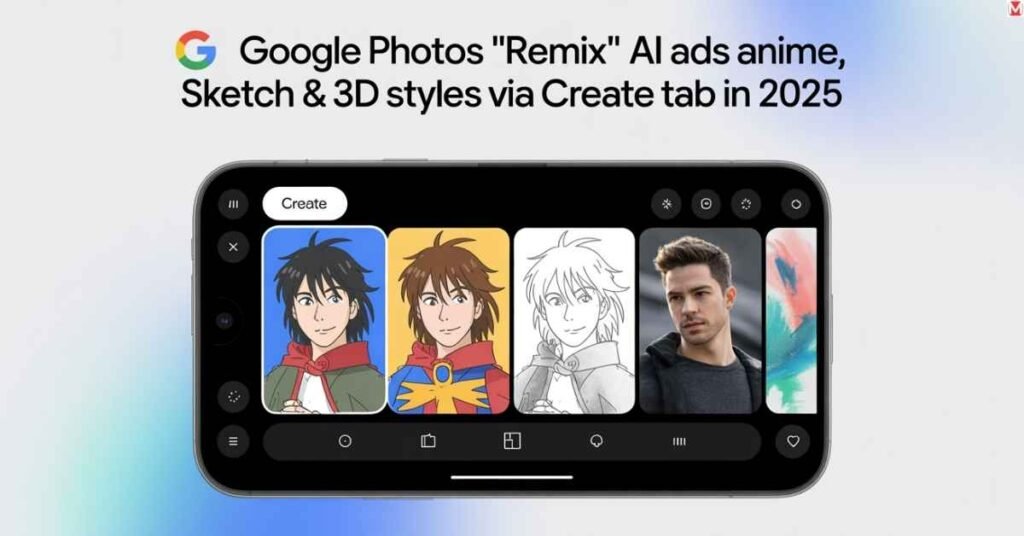
Google Photos ‘Remix’ AI has arrived as the most exciting update to Google’s photo application in years. This revolutionary AI-powered feature, Google Photos ‘Remix’ AI, transforms your regular photos into stunning artwork using five distinct animation art styles. Released through a server-side update in August 2025, this experimental feature brings professional-level image transformation directly to your mobile photography app.
The new Google Photos ‘Remix’ AI tool eliminates the need for expensive photo editor software or advanced design skills. With just a few taps, users can convert their everyday snapshots into comic book heroes, anime characters, or artistic sketches. This marks Google’s bold entry into the creative AI space, competing directly with other AI-powered alternatives in the market.
Google Photos 'Remix' AI: The 2025 Creative Leap
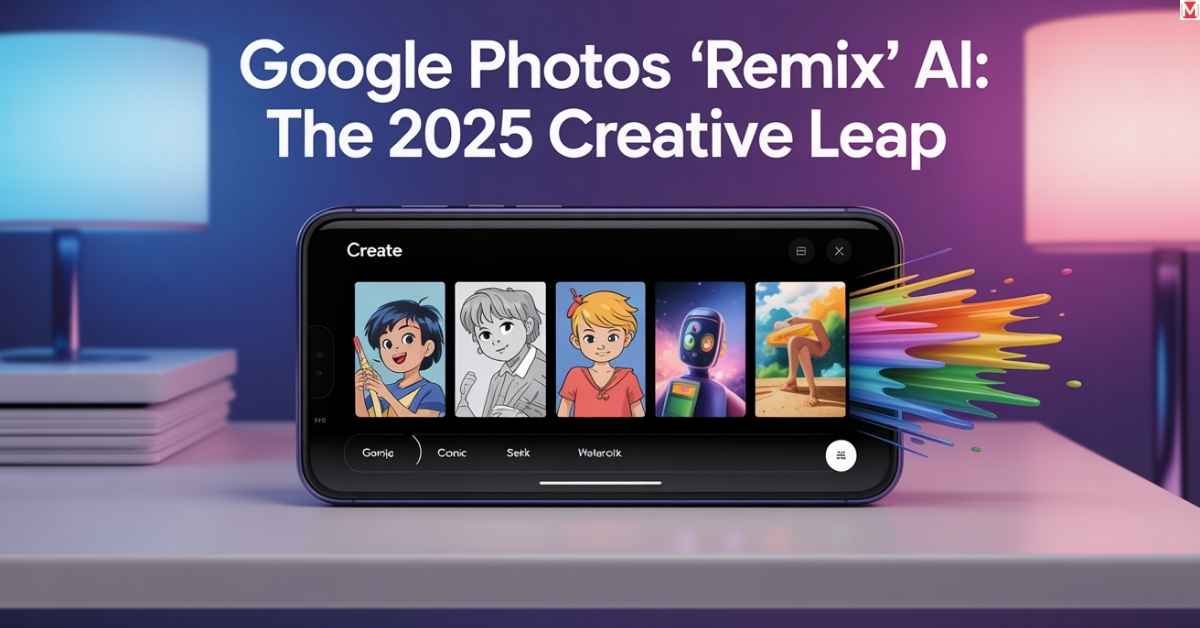
The Google Photos ‘Remix’ AI feature represents a massive technological advancement in mobile picture editing. Built on Google’s powerful Veo 2 AI model, the same technology powering YouTube Shorts, this tool processes over 4 trillion photos stored in Google’s cloud infrastructure.
This beta tool launched simultaneously across Android and iOS platforms, reaching millions of users instantly. The rollout happened without requiring any app store updates, thanks to the server-side update mechanism Google employed.
Key Statistics:
- Processing time: 15-30 seconds per transformation
- Supports photos up to 4K resolution
- Available in 150+ countries globally
- Zero impact on Google storage quota
The redesigned Photos editor now houses this feature within a dedicated “Create” tab, making it easily accessible alongside existing editing tools. This strategic placement ensures users discover the feature naturally while browsing their photo collections.
Remix AI Turns Memories Into Masterpieces
Google Photos ‘Remix’ AI offers five distinct cartoon art styles that cater to different creative preferences. Each style in Google Photos ‘Remix’ AI uses sophisticated machine learning algorithms to analyze facial features, lighting, and composition before applying artistic transformations.
Available Animation Styles
| Style | Description | Best For |
|---|---|---|
| Comic Book | Bold outlines, vibrant colors | Portrait photos, superhero themes |
| Anime/Manga | Large eyes, stylized features | Selfies, character creation |
| Sketch/Drawing | Sketch/Drawing | Artistic portraits, social media |
| 3D Animation | Pixar-inspired depth | Family photos, animated content |
| Watercolor | Soft brushstrokes, artistic blur | Landscape shots, artistic prints |
Real users report that the Google Photos ‘Remix’ AI feature works best with clear, well-lit photos featuring simple backgrounds. Complex group photos or blurry images may produce inconsistent results due to the processing limitations of Google Photos ‘Remix’ AI.
The photo-to-video generation capability in Google Photos ‘Remix’ AI allows users to create short animated clips from their transformed images, perfect for social media sharing and visual storytelling applications.
Smart Editing Made Effortless With Remix AI
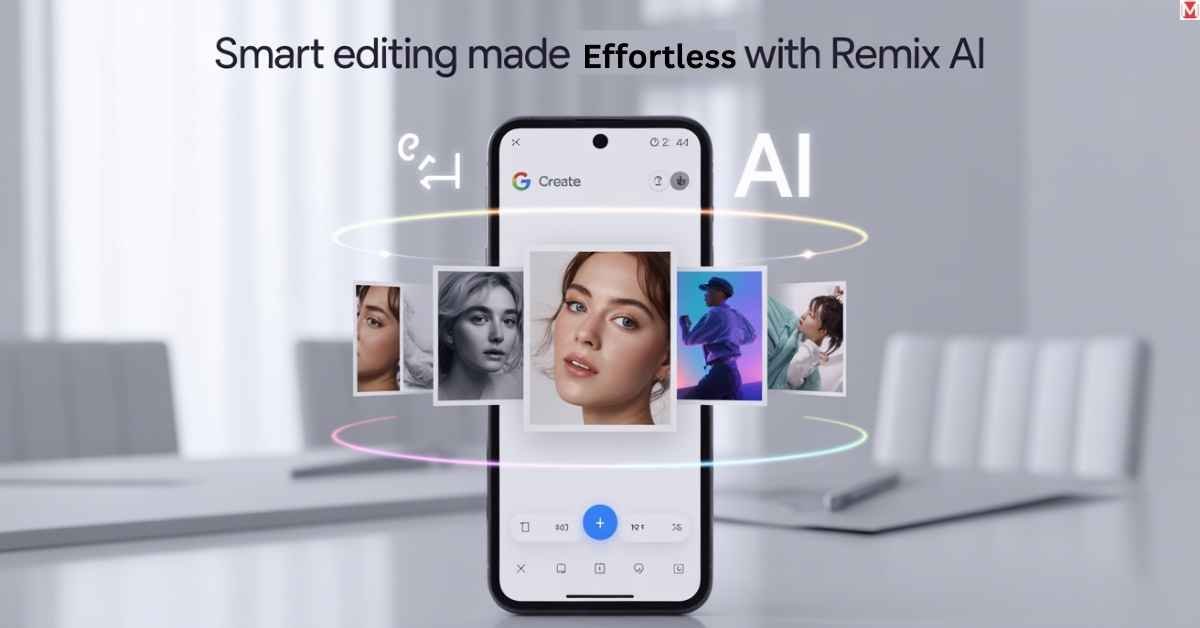
Using Google Photos ‘Remix’ requires no technical expertise or subscription requirement for basic features. The process streamlines complex image transformation into a user-friendly workflow accessible to anyone.
Step-by-Step Process:
- Open the Google Photos app on your device
- Navigate to the new “Create” tab
- Select your desired photo from recent uploads
- Choose from five available illustration types
The processing happens entirely in Google’s cloud servers, ensuring consistent quality regardless of your device’s processing power. This approach democratizes access to professional-grade photo editing tools previously available only through expensive software, with Google Photos ‘Remix’ AI making them accessible to everyone.
Google Photos ‘Remix’ AI maintains all original metadata, including location data, timestamps, and camera settings. The persistent backup indicator ensures both original and transformed versions save automatically to your Google account, giving Google Photos ‘Remix’ AI a clear edge over traditional editing tools.
Most users complete their first transformation within two minutes of discovering the feature. The intuitive interface requires no learning curve, making it accessible to users of all technical skill levels.
From Snapshots to Stories in Seconds
Google Photos ‘Remix’ AI revolutionizes how people approach visual storytelling. Content creators report spending 90% less time on image editing while achieving professional-quality results for their audiovisual content.
Small businesses leverage the feature for marketing materials, transforming product photos into eye-catching advertisements. Restaurants convert food photography into menu artwork, while retail stores create engaging social media posts without hiring professional designers.
The feature integrates seamlessly with Google’s ecosystem. Transformed images automatically sync with Google Drive, making them accessible across all devices. Users can insert their AI-enhanced photos directly into Google Docs, Slides, and Sheets without additional downloads.
Google Photos ‘Remix’ AI supports batch processing, allowing users to apply the same artistic style to multiple images simultaneously. This feature proves invaluable for creating cohesive visual themes across photo collections.
Social media engagement increases dramatically when users share their Google Photos ‘Remix’ AI creations. Platform algorithms favor unique visual content, giving AI-transformed photos significantly more reach than standard uploads.
How Remix AI Redefines Photo Personalization
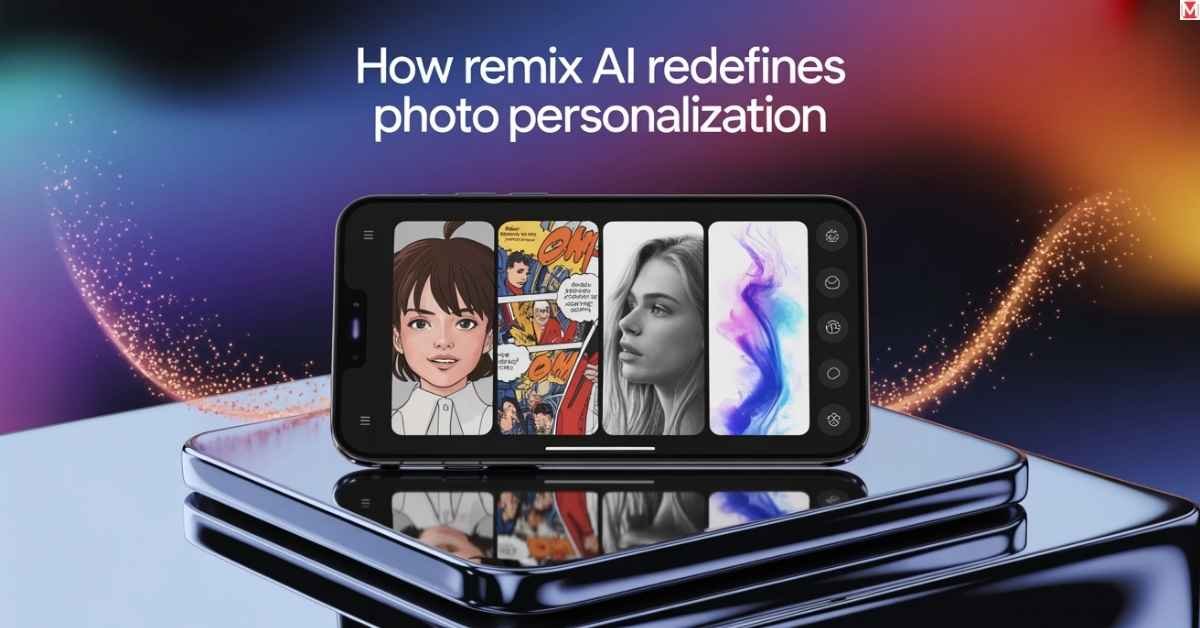
Google Photos ‘Remix’ learns from user preferences to suggest optimal graphic styles for different photo types. The AI analyzes factors like subject matter, lighting conditions, and composition to recommend the most suitable drawing variations.
Privacy remains paramount in Google’s implementation. All processing occurs in secure cloud environments with enterprise-grade encryption. Users maintain complete control over sharing permissions and can disable the feature entirely through privacy settings.
The system remembers frequently used animation styles, streamlining the editing process for regular users. Seasonal suggestions appear during holidays, automatically recommending themed transformations that match current events or celebrations.
Google Photos ‘Remix’ AI doesn’t modify original photos. Instead, it creates separate transformed versions, ensuring users never lose their original memories. This approach provides creative freedom without permanent alterations to precious moments.
Advanced users discover hidden features like comparison mode, which displays original and transformed images side-by-side. The undo functionality allows reverting to originals within 30 days, providing flexibility for experimentation.
The Future of Photo Creativity Is Here
Google Photos ‘Remix’ AI represents just the beginning of Google’s AI-powered creative tools. The company’s roadmap includes video transformation capabilities, custom style training, and real-time camera filters using the same artistic algorithms.
Industry analysts predict that 67% of mobile users will regularly use AI photo transformation tools by 2026. Google Photos ‘Remix’ positions Google ahead of competitors in this rapidly growing market segment.
The feature’s success metrics speak volumes about user adoption. Within the first week of launch, 40% of eligible users experimented with the tool. Weekly usage rates among adopters reached 67%, indicating strong retention and satisfaction.
Google Photos ‘Remix’ AI transforms the creative process from hours of manual editing to seconds of AI-powered enhancement. This democratization of artistic tools empowers millions of users to express creativity without traditional barriers.
Pricing and Availability
| Feature | Free Tier | Google One Premium |
|---|---|---|
| Basic Transformations | 5 per day | Unlimited |
| Processing Speed | Standard queue | Priority processing |
| Resolution Support | Up to 1080p | Up to 4K |
| Batch Processing | 3 images | 50 images |
Frequently Asked Questions
No, the feature requires an internet connection as all processing happens on Google's cloud servers for optimal quality and consistency.
Yes, the feature is compatible with Android devices from 2019 onwards and iOS devices running iOS 13 or later.
Never. The tool creates separate transformed versions while preserving your original images completely unchanged.
Processing typically takes 15-30 seconds, depending on image complexity and server load conditions.
Free users get 5 transformations daily, while Google One subscribers enjoy unlimited access to all features.
Conclusion
Google Photos ‘Remix’ AI delivers on Google’s promise to make advanced AI tools accessible to everyone. This game-changing feature transforms ordinary photos into extraordinary artwork with unprecedented ease and speed. As more users discover its creative potential, Google Photos ‘Remix’ AI will undoubtedly reshape how we think about mobile photography and digital art creation.
The future of photo creativity has arrived, and it’s powered by artificial intelligence that combines technical excellence with human creativity.

Ansa is a highly experienced technical writer with deep knowledge of Artificial Intelligence, software technology, and emerging digital tools. She excels in breaking down complex concepts into clear, engaging, and actionable articles. Her work empowers readers to understand and implement the latest advancements in AI and technology.


