 Skip to content
British AI tool development is changing how factories work around the world. These smart voice recognition systems and AI language tools help manufacturers cut costs and work faster. The latest voice cloning tools from UK companies are making factories smarter than ever before.
Manufacturing is getting a major upgrade. While North American companies dominate many tech areas, British firms are leading the charge in manufacturing AI. These tools work like an AI voice tool for machines – they understand what needs to be done and do it automatically.
The UK AI sector is now worth £66.4 billion, with £20 billion in investment. This growth shows how important these tools are becoming. The UK Government launched the AI Opportunities Action Plan in January 2025 to boost this growth even more.
British AI Tool Cuts CNC Setup Time from Hours to Minutes
Traditional CNC programming takes forever. Engineers spend 8-12 hours setting up complex parts. It’s like having to teach a machine everything from scratch each time. The skills needed are hard to find too – experienced programmers are retiring faster than new ones learn the job.
The CAM Assist plugin from CloudNC leverages AI to facilitate CAM strategies from just $99/month. This British AI tool is like speech synthesis for machines. Rather than manually coding every condition, the A.I. understands your intent and writes the program for you.
Here’s what makes it special:
- Speed: Setup times drop from hours to minutes
- Smart learning: The system gets better with each part it programs
- Easy use: Works with popular software like Mastercam and Fusion 360
- Cost savings: Saves thousands of hours per year for machining businesses
Real factories are doing their part to help get the job done. Setup time has been reduced from 6 hours to 45 minutes for one aerospace company. That’s akin to a full workday to a lunch break.
| Traditional Method | British AI Tool | Time Saved |
|---|---|---|
| 8-12 hours setup | 30-60 minutes | 85-90% |
| Manual programming | Automatic generation | 95% |
| Skill-dependent | Skill-independent | Training eliminated |
British AI Tool Powers Smart Factories: Live Use Cases
Smart factories are no longer science fiction. The British AI tool revolution is happening right now in real facilities across the UK. These systems work like advanced voice recognition systems, but for manufacturing equipment.
Automotive Success Story
Jaguar Land Rover turns to British AI tools to improve manufacturing. When demand for specific models spikes, the system shifts the flow of parts automatically. It’s a bit like having the equivalent of a smart speaker, but one that can control a whole factory instead of just play music.
Aerospace Breakthroughs
Rolls-Royce engine manufacturing now uses AI for quality control. The system spots defects before human inspectors can see them. This British AI tool acts like an AI-cloned voice that speaks the language of precision engineering.
Medical Device Innovation
UK medical device manufacturers use these tools for regulatory compliance. The AI automatically validates that each step meets strict health standards. French-speaking customers in medical export markets particularly value this reliability.
Small manufacturers are winning too. A Yorkshire engineering firm with just 3 workers now handles contracts from Fortune 500 companies. Their secret? A British AI tool that makes their small team as capable as much larger operations.
British AI Tool Versus Legacy Automation: Skill Gaps Vanish
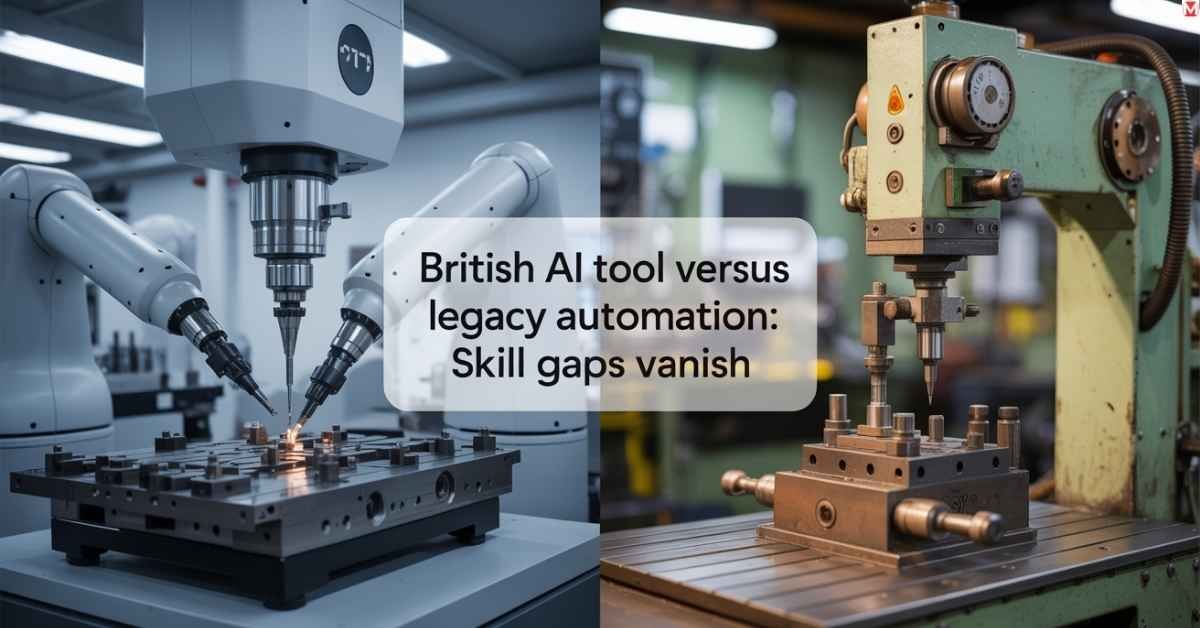
The manufacturing world faces a huge problem – not enough skilled workers. As one expert noted, “The problem that we have in the West is not enough people to run these machines, and that problem gets worse every single year”.
Traditional automation requires years of training. CNC programming takes 2-3 years to master properly. It’s like learning a new language with very specific grammar rules.
That’s entirely different from British AI tool tech. Novice workers can attain expert performance within weeks rather than years. The AI is analogous to language models for manufacturing – it knows what needs to be done (based on input specifications) and can decompose complex tasks into easy sub-tasks.
This version also helps combat accent discrimination in manufacturing. This means that those individuals who speak with regional accents or even cadence and pitch can just get on with the work at hand now, rather than worrying about managing linguistic misunderstandings. The thwarting of the AI doesn’t like UK styles or regional dialects, but it speaks the work.
The economic impact is massive. Routine manual work is replaced by jobs of higher value. Engineers can work on innovation rather than being bogged down with repetitive programming code.
Bring Manufacturing Home: How UK AI Is Driving Reshoring
British AI tool development is making it profitable to bring manufacturing back to the UK. Supply chain volatility has become permanent, with overseas companies turning away from UK suppliers. This creates opportunities for domestic production.
AI diminishes the dependence we have on cheap labor overseas.” And when a British AI tool can train machines to program themselves, the cost of labor becomes less important. Getting it out the door fast becomes more valuable than the lowest possible wages.
The numbers tell the story:
- Local production cuts delivery times by 60-80%
- Supply chain disruptions drop significantly
- Carbon footprint reduces through shorter transport
- Quality control improves with direct oversight
Government support is strong. Here in the UK, we’ve the “Made Smarter” scheme to encourage Industry 4.0 technology adoption. In manufacturing, AI adoption is fuelled by tax incentives. Then came Brexit, and the chance for the UK to position itself as the AI manufacturing hub of Europe.
Companies are already moving production back. The British AI tool advantage makes UK factories competitive with overseas facilities. When setup times drop by 85%, the math changes completely.
AI-Driven Maintenance & Digital Twins: The Industry 4.0 Upgrade
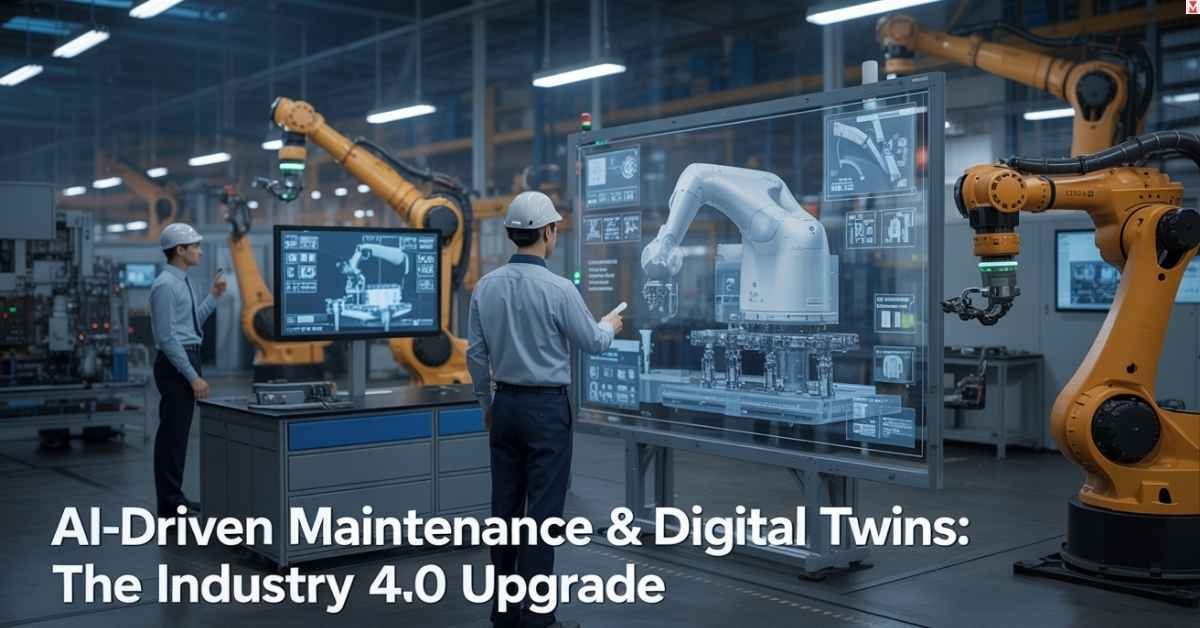
Predictive maintenance is revolutionizing how factories work. Over 50% of manufacturers are expected to integrate AI-powered predictive maintenance by 2025. This British AI tool approach prevents breakdowns before they happen.
Digital twins generate virtual replicas of real equipment. Engineers don’t have to pause production to test changes. It would be like having open-source voice cloning tools, but for an entire system of manufacturing.
Key Benefits
- Downtime reduction of 25-40% with predictive maintenance
- Virtual testing prevents costly mistakes
- Real-time optimization improves efficiency continuously
AI is always being fed data by IoT sensors. Edge computing analyzes this data in real time. When a bearing begins to wear out, the system automatically plans maintenance. Employees receive notifications on their smart devices before problems escalate into emergencies.
The global AI in manufacturing market is expanding at 35.3% annually, reaching $155 billion by 2030. British companies are capturing significant portions of this growth.
| Maintenance Type | Downtime | Cost | Efficiency |
|---|---|---|---|
| Reactive | High | £££ | 60% |
| Scheduled | Medium | ££ | 75% |
| AI-Predictive | Low | £ | 95% |
Cybersecurity matters too. Connective manufacturing requires protection from digital perils. British AI devices have built-in protection against cyber-attacks.
From Garage to Gigafactory: How UK AI Start-ups Fuel Scaling
The UK AI manufacturer community is alive and kicking. 73% of AI companies are in London, the South East, or East England. That is where those clusters of innovation happen, where ideas spread most quickly.
CloudNC's Journey
Using groundbreaking AI, CloudNC is building the world’s most intelligent factory. They began with a modest scale, but now work with large companies around the world. In December 2024, Siemens embedded CloudNC’s CAM Assist in their NX CAM software.
University partnerships drive innovation. Cambridge and Oxford research is spun out into commercial use. Innovate UK government investment powers early-stage companies.
Scaling Success Factors
- Early adoption by forward-thinking manufacturers
- Cooperation patterns with industrial giants in the developed areas
- Technology transfer from academic research to industry use
- Growing global markets for exports
Small manufacturers benefit most. A British AI tool can transform a garage operation into an international supplier. The same AI language tools that help preserve endangered languages can save dying manufacturing skills.
Start-ups focus on specific problems. Some work on voice cloning tools for equipment communication. Others develop accent discrimination solutions for global teams. Each innovation makes manufacturing more accessible.
Investment is flowing in. Venture capital firms see manufacturing AI as the next big opportunity. The British AI tool sector attracts funding because it solves real problems with measurable results.
Implementation Roadmap: Getting Started with British AI Manufacturing Tools
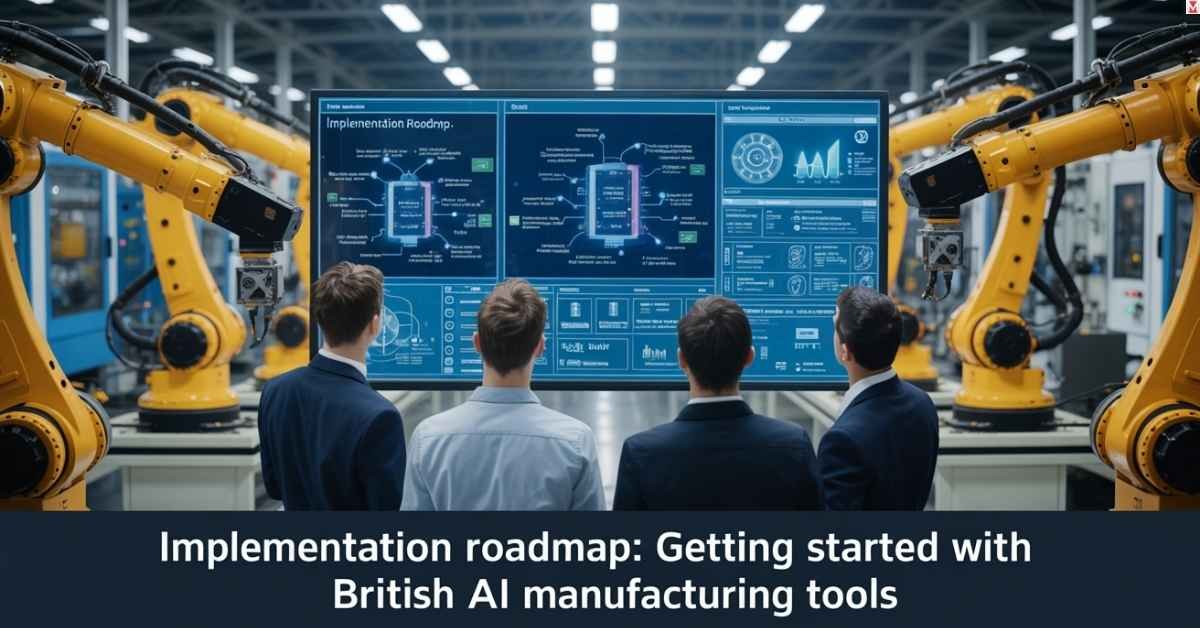
Starting with a British AI tool doesn’t require a massive investment. Most companies begin with pilot programs on single production lines. This approach reduces risk while proving value.
Assessment Phase Steps:
- Audit current manufacturing processes
- Discover Bottlenecks and Pain Points, BindingFlags Field searching in DllFind the most painful and slowest parts of processes.
- Gauge the ROI of bringing AI on board.
- Assess the readiness of employees for new technology
Pilot Program Strategy
Choose a production line and test one. Establish clear success metrics before you begin. Educate the core team on the new system. Track results carefully and record any changes.
Full-Scale Deployment
After your pilots prove successful, expand organically. When there is full implementation, CAM assist can save hundreds of product and estimation hours. This step requires change management.
The British advantage in AI tools lies in starting simple. And unlike complex language models, which require significant training, the manufacturing AI tools often operate instantly. They are made to be practical, not experimental instruments.
Integration with existing systems matters. The best British AI tool solutions integrate with existing equipment. You don’t have to throw it all out, just add some intelligence to what’s in place.
Future Outlook: What's Next for UK Manufacturing AI
The UK AI market is projected to reach $26.89 billion by 2030. Manufacturing will capture a large portion of this growth. British AI tool development continues to accelerate as more companies see results.
Emerging Technologies
Manufacturing optimization is boosted with quantum computing. AI design systems fused with the craft of advanced material science. AI enhances sustainable manufacturing through resource optimization.
Industry 5.0 Vision
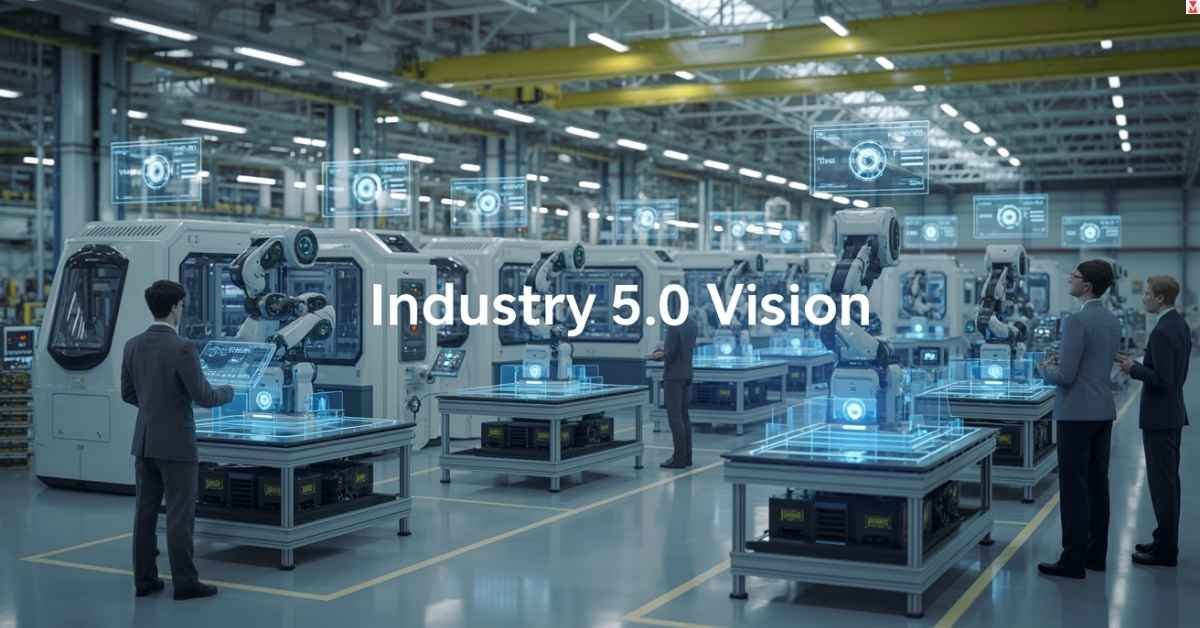
Currently, only 5% of UK manufacturing companies use AI, but the uptake is increasing rapidly. Finally, collaboration between humans and AI will shape the factory of the future. It becomes feasible to do mass customization with adaptive systems.
The UK AI tooling scene is still thriving, too. There will be lots of innovation around, for example, voice technology that gets rid of all the language barriers, or programming artificial intelligence systems to understand regional speech patterns. These new methods are a democratization of manufacturing.
International competitiveness remains strong. UK innovations in voice recognition systems and natural language processing give British manufacturers unique advantages. While Synthesia’s product focuses on video, British manufacturing AI concentrates on practical industrial applications.
British AI tool technology is reshaping global manufacturing. UK companies lead in creating solutions that work in real factories with real constraints. This applied nature differentiates British innovations from academic projects.
Frequently Asked Questions
British AI tools focus on practical manufacturing problems rather than flashy features. They're designed to work with existing equipment and integrate smoothly into current workflows. US firms often create complex solutions that require complete system overhauls.
Basic AI tools for manufacturing start at $99 a month. The majority of companies achieve payback in 8-12 months through the reduction of setup time and increased efficiency. And the investment is nominal compared with conventional automation retrofitting.
Yes, absolutely. Small manufacturers often see the biggest improvements because they can't afford large engineering teams. A British AI tool gives them capabilities that were previously only available to major corporations.
No, it changes their roles. Instead of routine programming, workers focus on oversight and innovation. The AI handles repetitive tasks while humans make strategic decisions. It's a job transformation, not job elimination.
Most systems work within days of installation. Unlike complex language models that need months of training, manufacturing AI tools are designed for immediate use. Pilot programs typically run for 30-60 days before full deployment.

Ansa is a highly experienced technical writer with deep knowledge of Artificial Intelligence, software technology, and emerging digital tools. She excels in breaking down complex concepts into clear, engaging, and actionable articles. Her work empowers readers to understand and implement the latest advancements in AI and technology.

Pingback: Baseus Security X1 Pro Launches: Smart Dual-Tracking Camera With Pro-Level Features